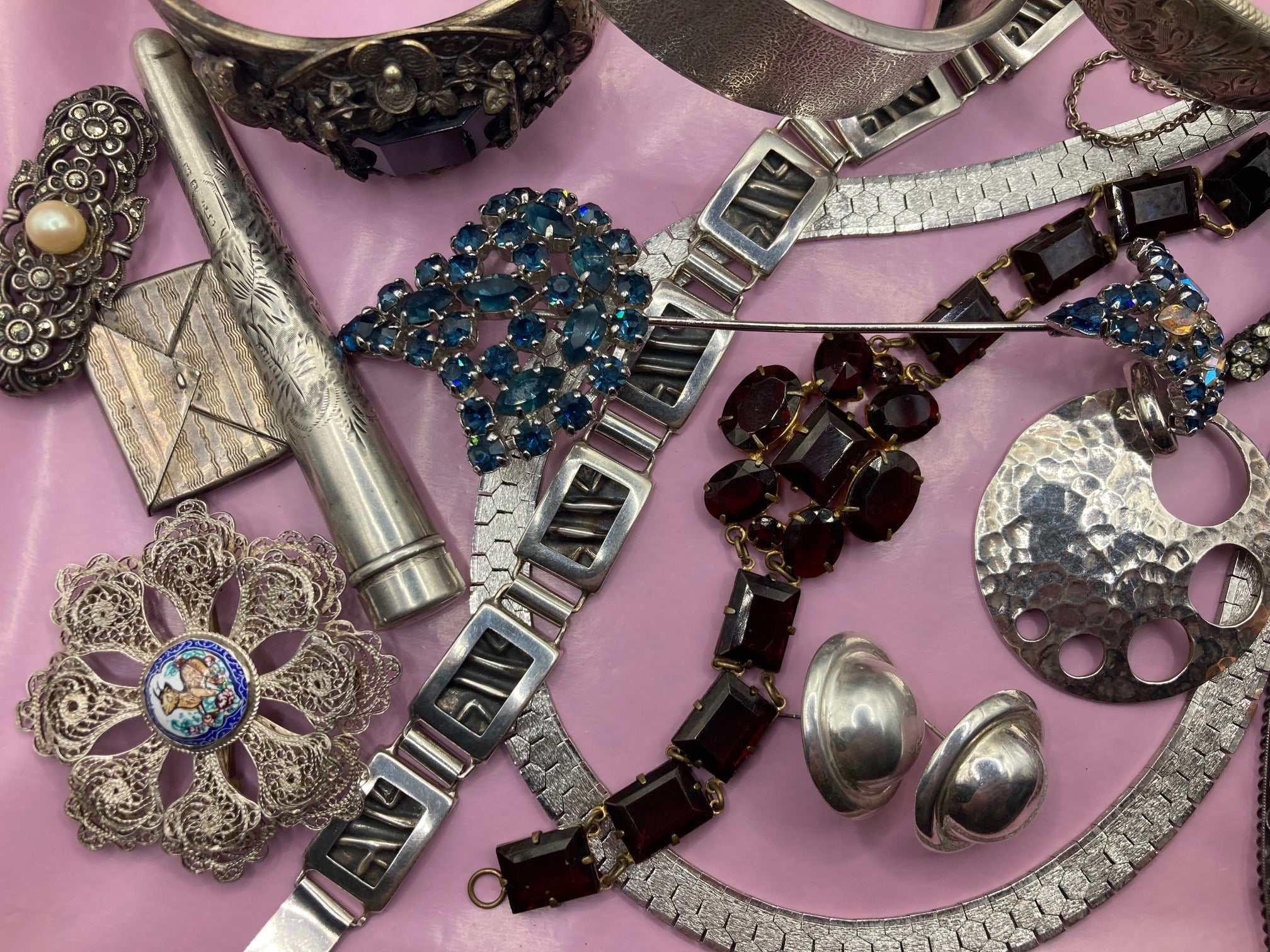
How to Tell the Difference Between Vintage and Antique Jewellery
One of the questions I'm asked most often — whether at a fair, online, or by customers browsing the shop — is: "Is this vintage or antique?" It's a great question, and the answer matters more than you might think, both for understanding what you're buying and for knowing its true value.
After years of hunting, collecting, and selling beautiful old jewellery, I've learned to read the clues a piece leaves behind. Let me share what I know.
The Official Definitions
The terms aren't just marketing words — they have broadly accepted meanings in the trade:
- Antique — generally accepted to mean a piece that is 100 years old or more. So right now, anything made before 1926 qualifies.
- Vintage — typically refers to pieces that are between 20 and 99 years old, so currently anything from roughly the 1920s through to the early 2000s.
- Retro — you'll sometimes see this used for pieces from the 1940s–1950s, though many collectors and dealers now extend "retro" to cover pieces from the 1980s through to the early 2000s too. It's a looser term, but it signals a piece that's distinctly of its era without quite reaching vintage age.
- Estate jewellery — simply means previously owned, regardless of age. A piece from last decade could technically be estate jewellery.
These definitions aren't legally enforced, so you'll see them used loosely — especially "vintage", which has become something of a catch-all. That's why it pays to know how to look beyond the label.
Using Hallmarks and Date Letters to Pinpoint an Era
For British jewellery, hallmarks are your best friend. A full hallmark tells you the metal purity, the assay office that tested it, and — crucially — a date letter that can pinpoint the year of manufacture to within a 12-month window.
I wrote a full guide to understanding English hallmarks that's well worth a read if you're new to this. Once you can read a date letter, you'll never have to guess again.
For pieces without hallmarks — particularly costume jewellery or imported pieces — you'll need to rely on style, materials, and construction instead.
Style Clues by Decade
Jewellery is a product of its time. Once you start recognising the design language of each era, dating a piece becomes almost instinctive:
- Edwardian (1901–1910): Delicate, lacy, feminine. Platinum filigree, pearls, pale stones. Think garden parties and long white gloves.
- Art Deco (1920s–30s): Bold geometry, strong contrasts, black and white combinations. Onyx, marcasite, paste diamonds. My personal favourite era — I wrote about my love of Art Deco jewellery separately if you'd like to explore it further.
- Retro / Mid-Century (1940s–50s): Wartime austerity gave way to glamour. Yellow and rose gold, large cocktail rings, floral and bow motifs.
- Mod (1960s–70s): Space-age shapes, bold colours, plastics and acrylics. Chunky, graphic, fun.
- Statement (1980s–90s): Oversized, colourful, unapologetically bold. Shoulder-grazing earrings, chunky chains, bright enamel.
Why "Vintage" Is Sometimes Used Loosely — and How to Spot It
Not everything labelled vintage actually is. Here are a few things to watch for:
- Reproduction pieces — made to look old but manufactured recently. Look for signs of genuine wear (not artificial distressing), and check clasps and findings, which tend to date a piece reliably.
- "Vintage style" — a legitimate description for new pieces inspired by old designs. Not the same as vintage.
- Vague dating — phrases like "circa 1950s" without any supporting evidence. Ask the seller what they're basing the date on.
A reputable seller should be able to tell you why they've dated a piece the way they have — whether that's a hallmark, a maker's mark, provenance, or stylistic evidence.
Shop Vintage Jewellery at Loved & Loved Again
Everything in my shop is carefully sourced and described as accurately as I can manage. Browse the full Vintage Jewellery collection, or explore by type — Vintage Rings, Vintage Necklaces, Vintage Brooches, and more.
If you ever have a question about a specific piece — its age, its hallmarks, its history — just ask. That's what I'm here for.
— Karen